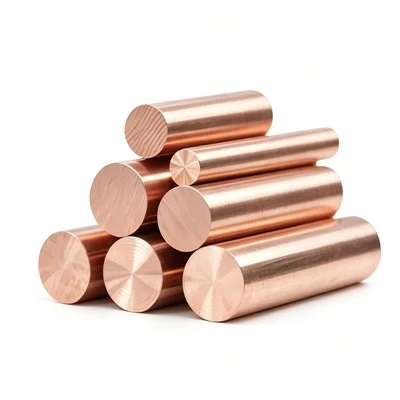
Hello everyone! As a supplier of copper wire rod, I’m often asked about the differences between hard – drawn and soft – drawn copper wire rod. In this blog, I’d like to share some in – depth knowledge about these two types of products. Copper Wire Rod
Physical Properties
Let’s start with the physical properties. Hard – drawn copper wire rod is characterized by its high strength and hardness. Through a series of cold – drawing processes, the internal crystal structure of the copper changes, which significantly enhances its mechanical strength. The cold – drawing process involves pulling the copper rod through a series of dies with progressively smaller diameters. As the copper is deformed, the dislocations within its crystal lattice interact and entangle, making it more difficult for further plastic deformation to occur.
On the other hand, soft – drawn copper wire rod is much more ductile and malleable. It is usually produced by annealing the copper rod after the drawing process. Annealing is a heat – treatment process where the copper is heated to a specific temperature and then slowly cooled. This process relieves the internal stresses generated during the cold – drawing process and allows the crystal structure to recrystallize, resulting in a softer and more flexible material.
In terms of appearance, hard – drawn copper wire rod often has a smoother and shinier surface due to the cold – drawing process. The dies used in the cold – drawing operation also give the wire rod a more uniform diameter. Soft – drawn copper wire rod may have a slightly duller appearance, especially if it has undergone an annealing process that can sometimes cause a thin oxide layer to form on the surface.
Electrical Conductivity
One of the most important aspects for applications of copper wire rod is its electrical conductivity. Copper is renowned for being an excellent conductor of electricity, and both hard – drawn and soft – drawn copper wire rod maintain high levels of electrical conductivity.
Hard – drawn copper wire rod, despite the changes in its internal structure due to cold – drawing, still retains a very good electrical conductivity. However, the cold – working process can introduce a small amount of lattice distortion, which may cause a very slight reduction in conductivity compared to soft – drawn copper.
Soft – drawn copper wire rod generally has a slightly higher electrical conductivity. The annealing process that softens the copper also helps to reduce the lattice defects and improves the flow of electrons through the material. In applications where high – efficiency electrical conduction is crucial, such as in power transmission lines and high – performance electrical motors, soft – drawn copper wire rod may be the preferred choice.
Thermal Conductivity
Similar to electrical conductivity, thermal conductivity is another key characteristic of copper. Copper’s high thermal conductivity makes it suitable for a wide range of heat – transfer applications.
Hard – drawn copper wire rod has sufficient thermal conductivity for most applications. But again, the lattice distortion caused by cold – working can slightly impede the transfer of heat compared to soft – drawn copper.
Soft – drawn copper wire rod, with its more regular crystal structure after annealing, offers better thermal conductivity. This property makes it ideal for applications like heat exchangers and cooling systems, where efficient heat transfer is essential.
Applications
The different properties of hard – drawn and soft – drawn copper wire rod lead to diverse applications.
Hard – drawn copper wire rod applications
- Wire ropes and cables: The high strength of hard – drawn copper wire rod makes it well – suited for wire ropes and cables used in construction, mining, and marine industries. These ropes need to withstand high tensile forces and harsh environmental conditions.
- Fasteners and springs: In the manufacturing of bolts, nuts, and springs, the hardness and strength of hard – drawn copper ensure the durability and reliability of these components.
- Automotive wiring harnesses: Although soft – drawn copper is also commonly used in automotive wiring, hard – drawn copper can be chosen for areas where the wires need to withstand mechanical stress, such as in engine compartments.
Soft – drawn copper wire rod applications
- Electrical power transmission: As mentioned earlier, its high electrical conductivity makes soft – drawn copper wire rod the top choice for power transmission lines, from high – voltage overhead lines to low – voltage distribution cables.
- Electrical motors and generators: Soft – drawn copper is widely used in the windings of motors and generators. The high conductivity and flexibility make it easier to wind the wire into the complex shapes required for these electrical devices.
- Electronics: In the electronics industry, soft – drawn copper wire rod is used for making printed circuit boards (PCBs), connectors, and other components. The high purity and conductivity are essential for the proper functioning of electronic devices.
Manufacturing Process
The manufacturing process for hard – drawn and soft – drawn copper wire rod differs significantly.
Hard – drawn copper wire rod manufacturing
- Raw material preparation: High – purity copper is usually the starting material. The copper is first melted and cast into large billets.
- Hot rolling: The billets are then heated and hot – rolled into smaller rods. This process helps to refine the grain structure of the copper and reduces the diameter of the rod.
- Cold – drawing: The hot – rolled rods are further cold – drawn through a series of dies to achieve the desired final diameter. Each pass through the die reduces the diameter and increases the strength of the wire rod.
Soft – drawn copper wire rod manufacturing
- Initial steps: Similar to hard – drawn copper, it starts with melting and casting high – purity copper into billets, followed by hot – rolling to reduce the diameter.
- Cold – drawing: Cold – drawing is also done to achieve the desired diameter, but after the cold – drawing process, an additional annealing step is required.
- Annealing: The cold – drawn copper wire rod is heated to a specific temperature (usually between 200 – 400 degrees Celsius for copper) and then slowly cooled. This annealing process restores the ductility and electrical conductivity of the copper.
Cost Considerations
Cost is an important factor in any purchasing decision. Generally, hard – drawn copper wire rod is relatively less expensive than soft – drawn copper wire rod. The reason lies in the manufacturing process. The additional annealing step required for soft – drawn copper adds to its production cost.
However, when considering the overall cost, one should also take into account the specific application requirements. For some applications where the lower cost of hard – drawn copper can meet the requirements, such as in certain non – critical structural applications, it may be the more cost – effective choice. But for applications where high electrical or thermal conductivity and flexibility are essential, the higher cost of soft – drawn copper may be justified by its superior performance.
Conclusion
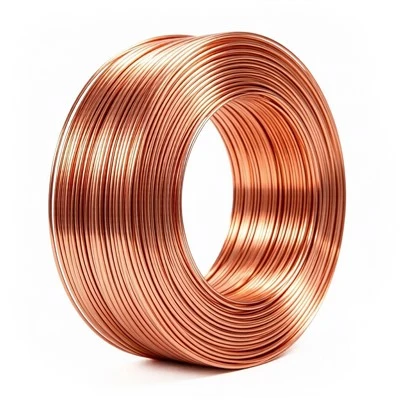
In conclusion, the differences between hard – drawn and soft – drawn copper wire rod are significant in terms of physical properties, conductivity, applications, manufacturing processes, and costs. Understanding these differences is crucial for choosing the right product for your specific needs.
Copper Wire Rod As a copper wire rod supplier, I’m here to offer you high – quality hard – drawn and soft – drawn copper wire rod products. Whether you need copper wire rod for electrical applications, construction, or other industries, I can provide you with professional advice and suitable solutions. If you’re interested in purchasing copper wire rod, please feel free to reach out and start a procurement discussion with me. I’m looking forward to working with you to meet your copper wire rod needs.
References
- "Copper – Properties, Applications and Production" by the International Copper Association.
- "Materials Science and Engineering" textbooks by various authors, which cover the principles of metal processing and properties.
- Industry reports on copper wire rod manufacturing and applications.
Zhejiang Jintai Copper Industry Co., Ltd.
We are one of the most professional copper wire rod manufacturers and suppliers in China, also support customized service. With abundant experience, we warmly welcome you to wholesale bulk high quality copper wire rod made in China here from our factory. For quotation, contact us now.
Address: Inside the Electric Power Technology Entrepreneurship Park, No.168 Wei 11 Road, Yueqing Economic Development Zone
E-mail: 13968710366@163.com
WebSite: https://www.jintaicopper.com/
